I like to think I read a lot of comics. I have my normal pull list I get delivered monthly that fluctuates around 15 titles usually. I have Uncanny X-Men, X-Men, and Radiant Black held for me at Newbury Comics so I can keep a discount going. I also have boxes filled with old comics that I have collected for most of my life. I try to read a good mix of new and old comics, but sometimes I’ll go in spurts of reading just one thing. In the last couple of weeks, I have been reading mostly old Fantastic Four comics for “Kirby Comics Month.” When I get on one of these jags, making the switch to another comic can be very jarring.
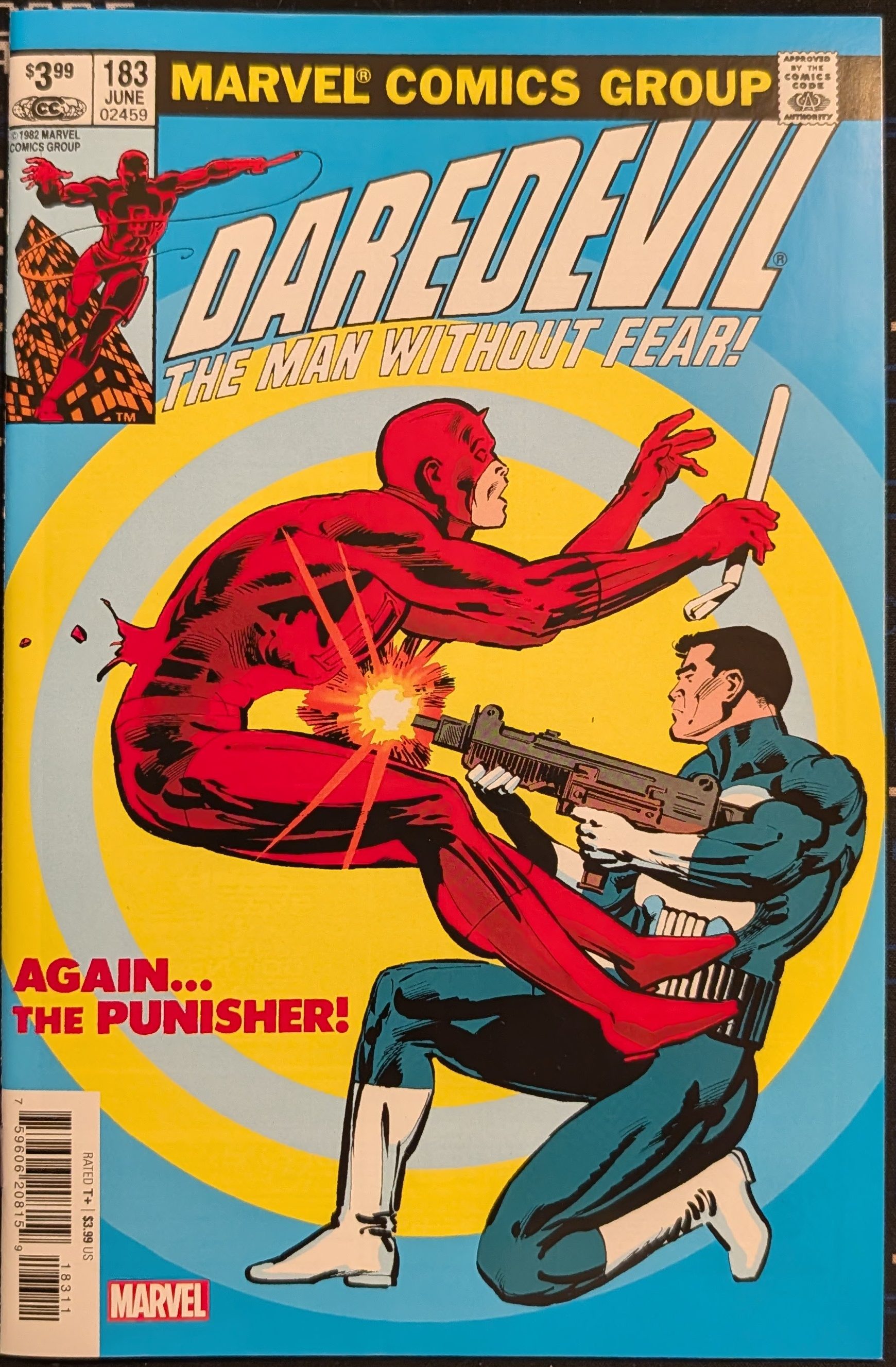
This morning, I decided to read another Daredevil comic, so I pulled the facsimile edition of issue #183, and let me tell you, this is about as different as you can get from mid-sixties peak Stan Lee and Jack Kirby. Instead of amazing science fiction and purple prose, this comic is scary and filled with gritty violence befitting the era. There are two components to the story, the first being an anti-drug PSA with assistance supplied from the Phoenix House (as listed in the credits). The second part is a rough-and-tumble adventure in which Daredevil tangles with the Punisher for the first time.
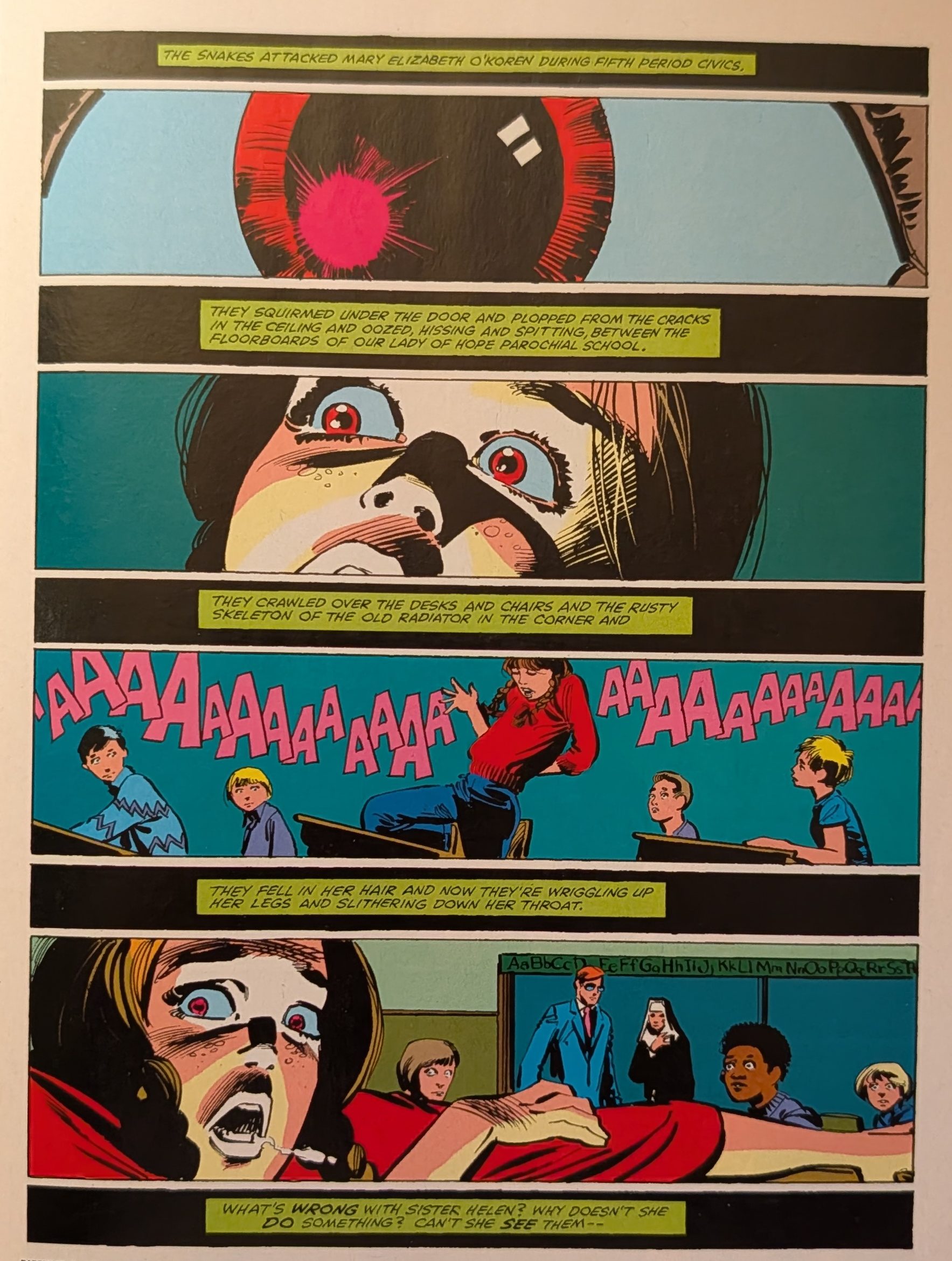
Frank Miller and Roger McKenzie, credited co-writers, deliver a powerful message about the devastation that drugs can cause—in this case, PCP. Matt Murdock is in a Catholic school classroom, presumably middle or high school, with one of the nuns when Mary Elizabeth starts to have a bad trip. She freaks out and launches herself through the window, falling to the schoolyard below. Matt is unable to reach her before she jumps and quickly heads downstairs, finding time to change into his Daredevil costume. He scoops up the injured Mary and rushes her to the hospital on foot. The ER doctors try their best, but Mary does not survive. The surgeon who delivers the news to Daredevil then goes into a speech about the evils of drugs and the damage they can do to young people.
As the PSA portion of the comic concludes, Mary’s brother Billy arrives at the hospital only to be told the sad news about his sister. Daredevil and Billy go their separate ways, both set on getting revenge on the dealers who “pushed” Mary into drugs. Billy goes home to get his father’s gun, both parents arguing and too busy to understand what is happening to their family. Daredevil, meanwhile, puts on what passes for a “disguise” and starts walking the streets of Hell’s Kitchen, determined to find the scumbags selling PCP in his neighborhood so that he can deliver some non-lethal justice.
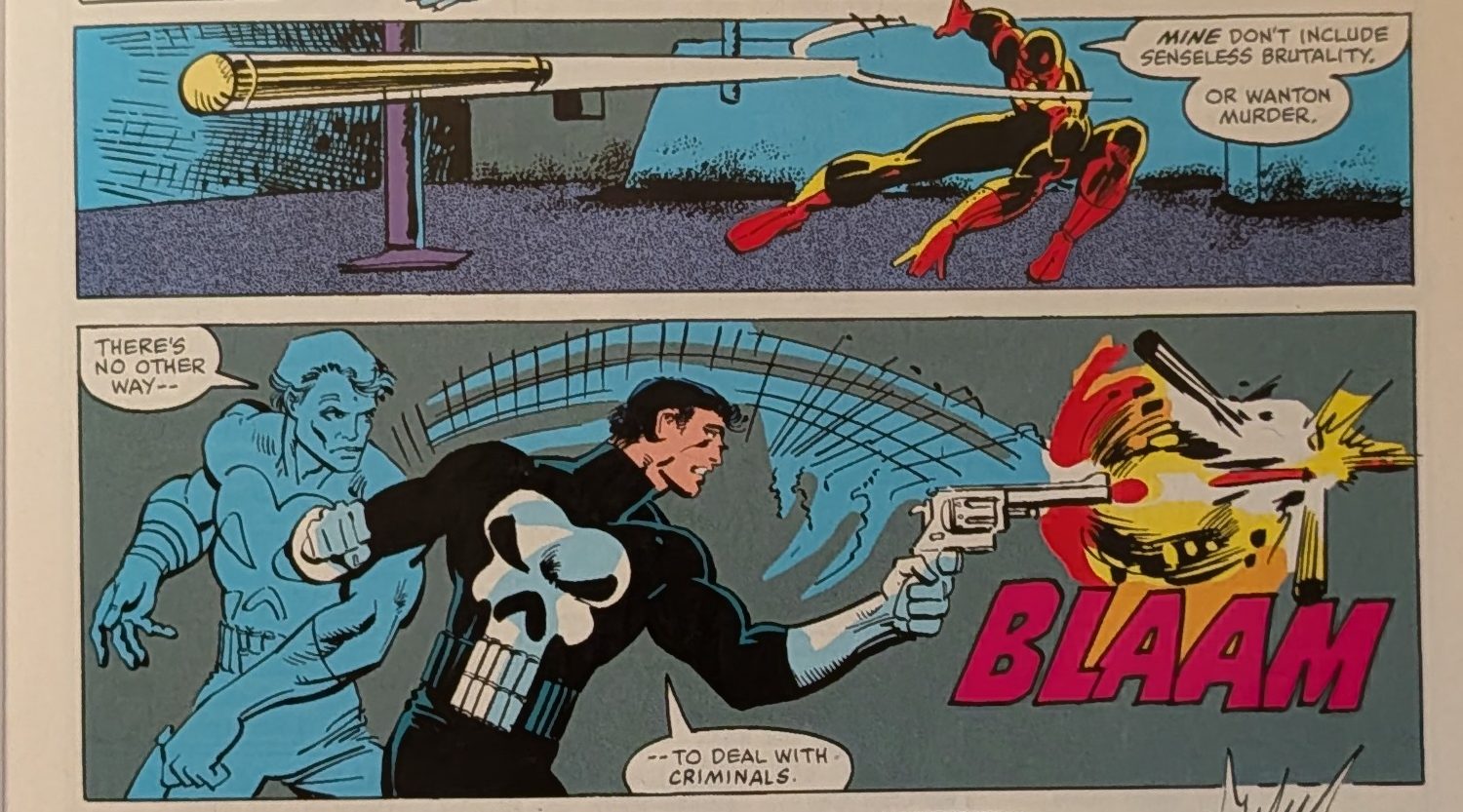
The Punisher also happens to be on the prowl, looking to be the rain that washes the scum off the streets of New York. As Daredevil is fighting with three young men, the Punisher intervenes and kills one of them. The Punisher and Daredevil get into it as Matt tries to prevent him from killing the other two men. Eventually, the dealer Flapper, that everyone is looking for, enters the scene and is promptly shot from behind. The Punisher takes off, and Daredevil heads to the rooftop to find Billy with his dad’s gun. The rest of the story involves Daredevil / Matt Murdock tracking down Flapper’s killer, defending Billy in court for a murder he did not commit, and fighting with the Punisher both physically and verbally about the rights and wrongs of vigilantism and killing.
The issue is important and deserving of a facsimile reprint for a couple of reasons. It is the first meeting of Daredevil and the Punisher and the beginning of their relationship. Through the years, they will be adversaries, each with their staunch convictions that their brand of justice is the right one. Occasionally they will be allies, but eventually, it will always come back to the argument about taking a life. When done well, these basic tales of right and wrong have been memorable and entertaining, but it all started with this issue.
The anti-drug message is woven into the story so that it feels natural and does not pull the reader out of the story. I grew up in this era and was the prime target for this kind of message. Delivered through comics, TV, and school, drug awareness was a big deal and omnipresent. It was often heavy-handed, meant to be frightening, and hopefully got the message across. I can remember experts coming to our sixth-grade class to talk about the D.A.R.E. program (Drug Abuse Resistance Education). There were also “very special” episodes of our favorite TV programs, like when Alex P. Keaton takes speed to help prepare for exams on Family Ties. Finally, we can’t forget the “I learned it by watching you” or “This is your brain on drugs” PSAs on TV.
In my case, these messages were effective. I was scared of possibly meeting kids that would use peer pressure to get me to take drugs, and of kids that might freak out if they were hooked on Angel Dust. In all honesty, though, I lived a pretty sheltered life. I can remember my best friend in the eighth grade telling me he brought a couple of joints to school that he swiped from his older siblings. He never showed them to me, so who knows if he really had them or was just trying to show off. That was about as close as I got to drugs growing up. Yes, they were around, and I’m sure kids around me were experimenting with them and alcohol. I was never pressured into anything I didn’t want to do, and I never had to watch a friend go through a window because they were on a bad trip—despite all the warnings from Daredevil, Alex Keaton, and that guy making fried eggs. I did keep reading Daredevil comics, though; that never wavered.


Leave a Reply